Khidma.live Blog
Insights, guidance, and reflections on mental health, marriage, and Islamic principles.
Dua for Good Health: 8 Authentic Du'as for 'Afiyah, Healing and Protection
The du'a the Prophet ﷺ never abandoned, morning and evening plus seven more for health, healing and protection, with Arabic and sources. About these du'as, or about illness and faith. A verified scholar records a private audio answer — no payment, nobody told.
Islamic Psychology: What It Is, How It Works, and Who It's For
Islamic psychology is the study and treatment of the human psyche within an Islamic understanding of what a person is. It integrates the tradition's concepts of the soul, mind and behavior with modern clinical science, aiming at mental, emotional and spiritual wellbeing together
Dua for Anxiety and Depression: 7 Authentic Du'as and What to Expect
These du'as are authentic, they are powerful, and they were given for exactly this. But the Prophet ﷺ who taught them also commanded seeking treatment for illness. Both belong here.

Depression in Islam: Is It Weak Faith, a Punishment, or an Illness?
Depression is an illness. Not a feeling, not a character defect, not a verdict on your faith. The scholars call it *marad* — the same word for any disease and the Prophet ﷺ commanded seeking treatment for disease.
Is Overthinking From Shaytan? What Islam Actually Says
Not all overthinking is from shaytan. The sources distinguish several different things that get collapsed into one English word.
Why Didn't Allah Answer My Du'a? Grief, Loss and Faith in Islam
The Prophet ﷺ described three ways Allah answers a supplication, and only one of them is what we asked for at the time we asked for it.
Does a Husband Need Permission for a Second Wife in Islam?
Her consent is not a pillar or a condition of the second marriage's validity. But permission is not the same as conduct. Concealment that required lying to you, hiding money, or abandoning your nights is a separate matter, and one he carries sin for.
Can an Imam Help With Marriage Problems? Who to Talk To in Islam
Bringing in a third party is Qur'anic, not a failure. It is the prescribed mechanism when a couple cannot resolve things privately. Read: what the Qur'an says about bringing in a third party, when it's too early, and who actually qualifies.

Muslim Marriage Problems: Why You Keep Having the Same Argument
Research on long-term couples for decades, has found that roughly two-thirds of relationship conflict is never fully resolved — it is "managed" or it keeps returning, because it is not really about the dishes or the money or the in-laws.

How to Save Your Marriage in Islam: Sulh, Repair and Growing Together
Reconciliation in Islam is not a mood. It is a process with a name and an order. Sulh is the settlement between spouses and is named in the Qur'an as the better path: "and settlement is best" (an-Nisa 4:128). It means renegotiating how the marriage works, by genuine mutual consent.

My Husband's Zina: Does It Affect My Barakah and Children?
A wife who remains for her children, for financial reasons, because she has no other options, or because she is hoping he reforms — is not sinful and does not share his guilt.
In-Laws in Islam: What a Wife Is and Isn't Obliged to Do
You are not obliged to live with your in-laws. Separate accommodation is an established right, and you may ask for it at any time. You are not obliged to serve them. Cooking, cleaning, caring - none of it is a religious duty. Where you do it, it is voluntary kindness, and stopping carries no sin.
Can Parents Force Marriage in Islam? Your Right to Refuse
No. Your consent is a condition of the nikah, not a courtesy. An adult woman cannot be married without her agreement. If she is forced, the contract is invalid or suspended on her approval.
Does Allah Forgive Zina? Tawbah and Repeated Relapse
Zina is a violation of the right of Allah (haqq Allah). It does not involve taking anyone's property, so nothing is owed to another person and nothing needs settling with anyone else.

Child Custody in Islam: Will I Lose My Children in Khula?
Seeking khula does not cost you custody. How a marriage ends whether he divorced you, a judge separated you for harm, or you initiated khula has no bearing on your right to your children.
Islamic Inheritance and Wills: Shares, Wasiyyah and Rules
You do not distribute your own estate. Once a person dies, Islam automatically assigns fixed shares to eligible heirs. Your will does not allocate those shares and cannot change them.
My Husband Cheated: What Islam Says and How to Decide
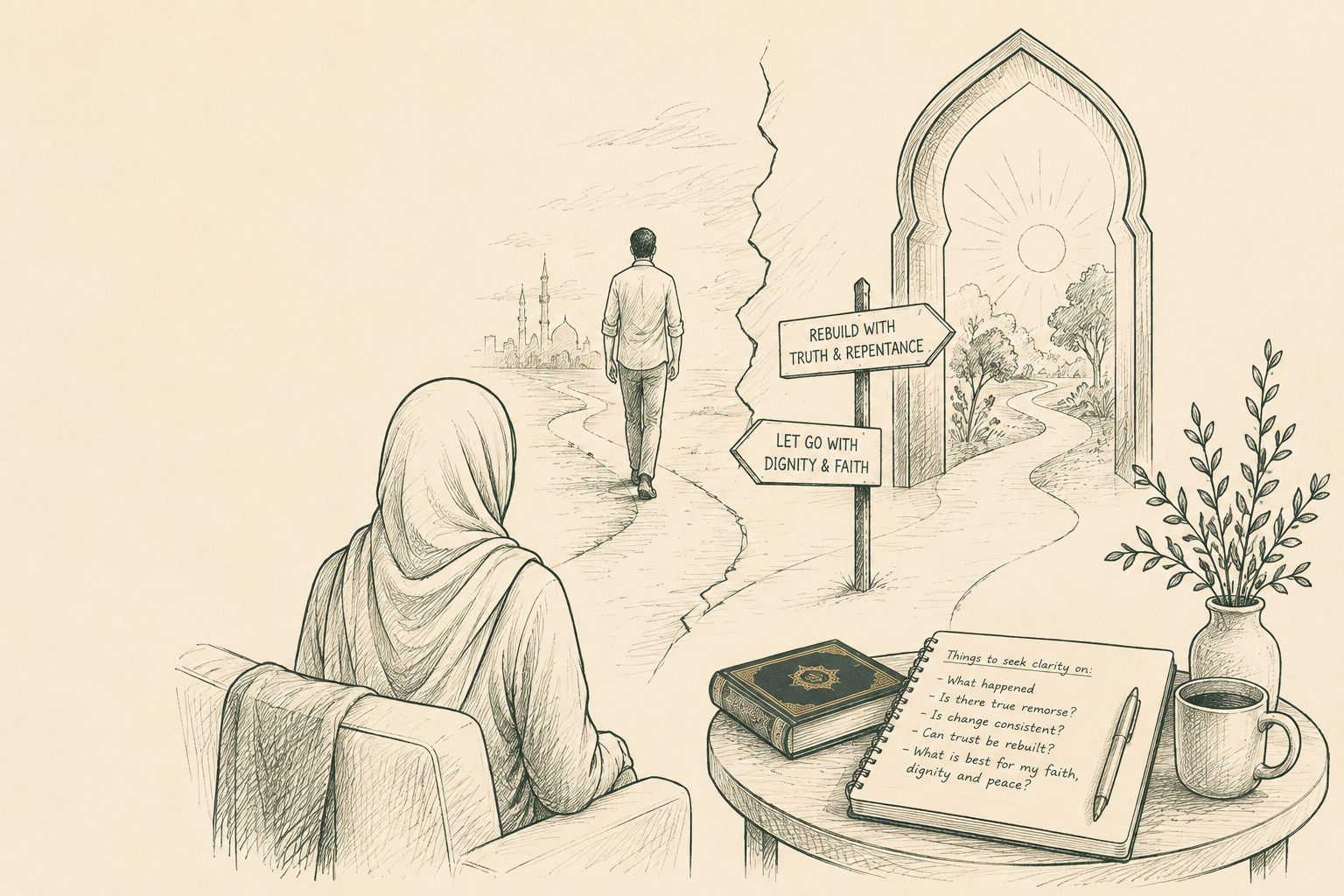
Islam does not require you to stay, and it does not require you to leave. His act does not end the marriage by itself, but it gives you the right to end it if you choose. Forgiveness is praiseworthy. It is not obligatory.
What Is Mahr in Islam? Meaning, Amount and Your Rights
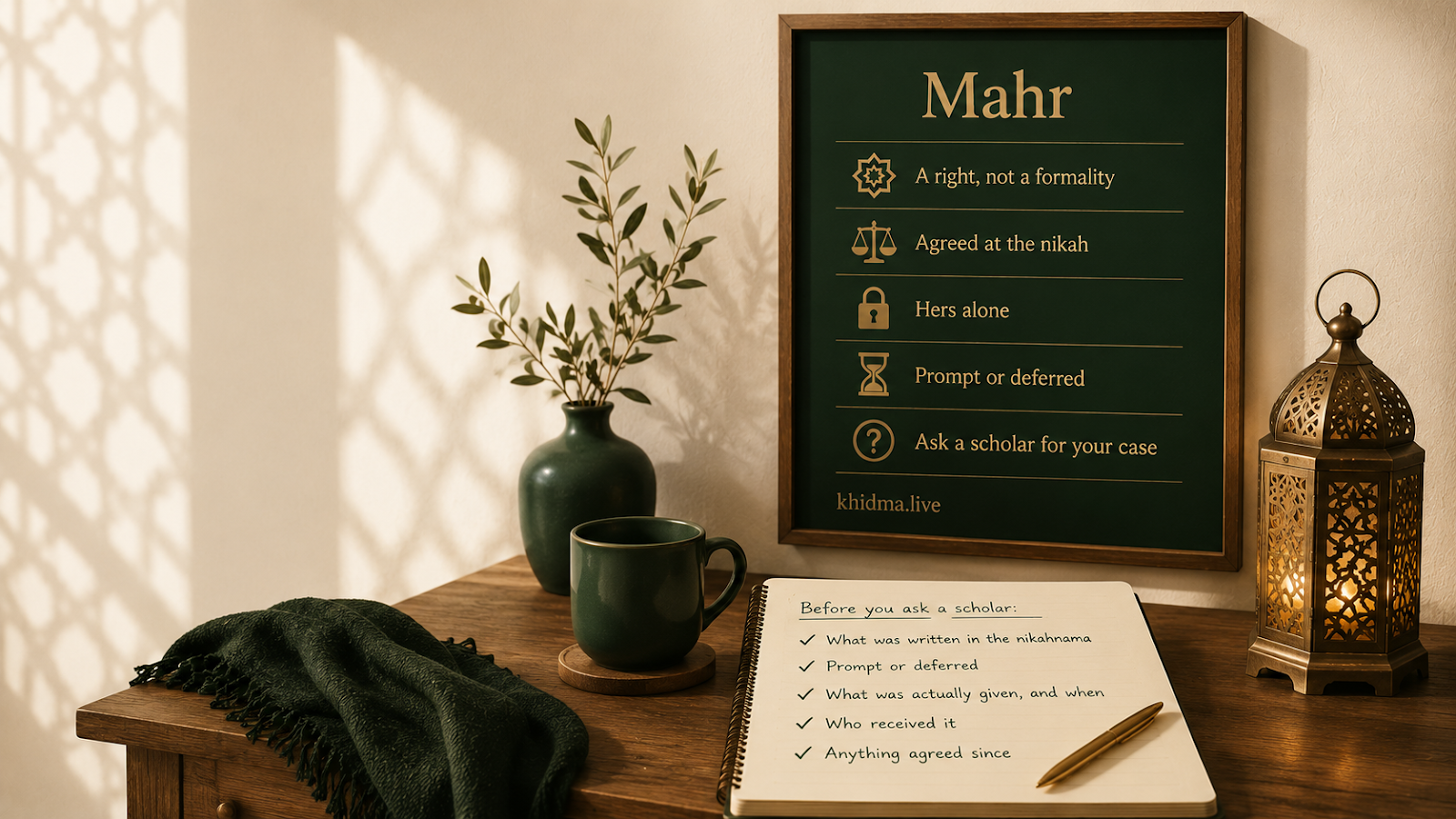
Mahr is an obligatory payment from the husband to the wife, arising from the marriage itself. It belongs to her alone — not to her father, not to her guardian, not to the household. It is not a purchase price, and it is not something her family provides.
How to Talk to Your Husband Without It Becoming a Fight
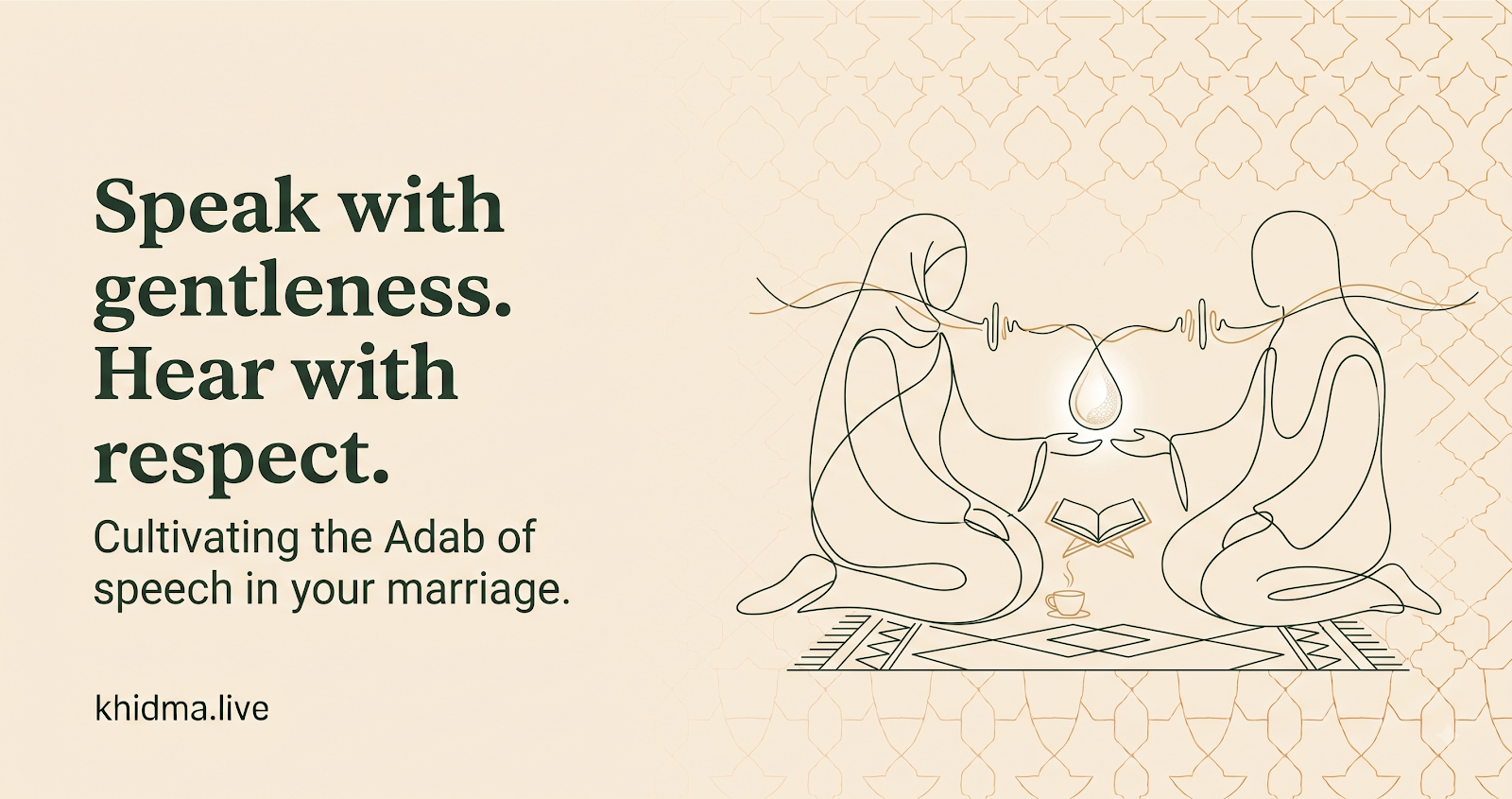
Islamic scholarship treats the way spouses speak to each other as a subject in its own right, under *husn al-mu'asharah* — good companionship. It is not vague advice to be nice. It contains specific, practical instructions, and several of them are precisely the techniques a counsellor would give you.

Muslim Therapist Online: How to Find Qualified, Faith-Aware Help
A faith-aware or faith-integrated Muslim therapists clinically qualified and trained to work within an Islamic framework - someone who understands your faith as a foundation for healing rather than a complication to manage.
What Is Khula in Islam? Meaning, Grounds and Process
**Talaq** is divorce pronounced by the husband. It is his to initiate. **Khula** is ordinarily an agreed separation sought by the wife in return for compensation. It can be concluded without going to court where the husband agrees. **Faskh** is dissolution based on a legally recognised defect or cause — often ordered by a judge, not dependent on the husband's consent, and compensation to the husband is not an inherent element of it.
Is Emotional Abuse Haram in Islam? What Scholars Say
Yes. What is commonly called emotional abuse is haram where it involves unjust harm — repeated humiliation, insults, ridicule, degrading names, intimidation, false accusations, or deliberately causing emotional distress.
In-Law Conflict in Islamic Marriage: How to Set Boundaries Without Losing Your Deen
You can honor your in-laws and still protect your peace. You can be a good wife and still expect your husband to lead with fairness inside his own home.
What Is Nafaqah in Islam? A Wife's Financial Rights
A wife's income is her own. Providing for the household is the husband's obligation. Nafaqah is the husband's obligation of financial maintenance, and classical jurists discussed its scope in considerable detail. It is generally understood to include:
Religious OCD in Islam: How to Break the Waswasa Cycle
That is not a failure of your faith or your understanding. It is a sign that what you are dealing with has moved beyond a religious question into a recognised behavioural pattern — one that has its own mechanism, and its own way out.
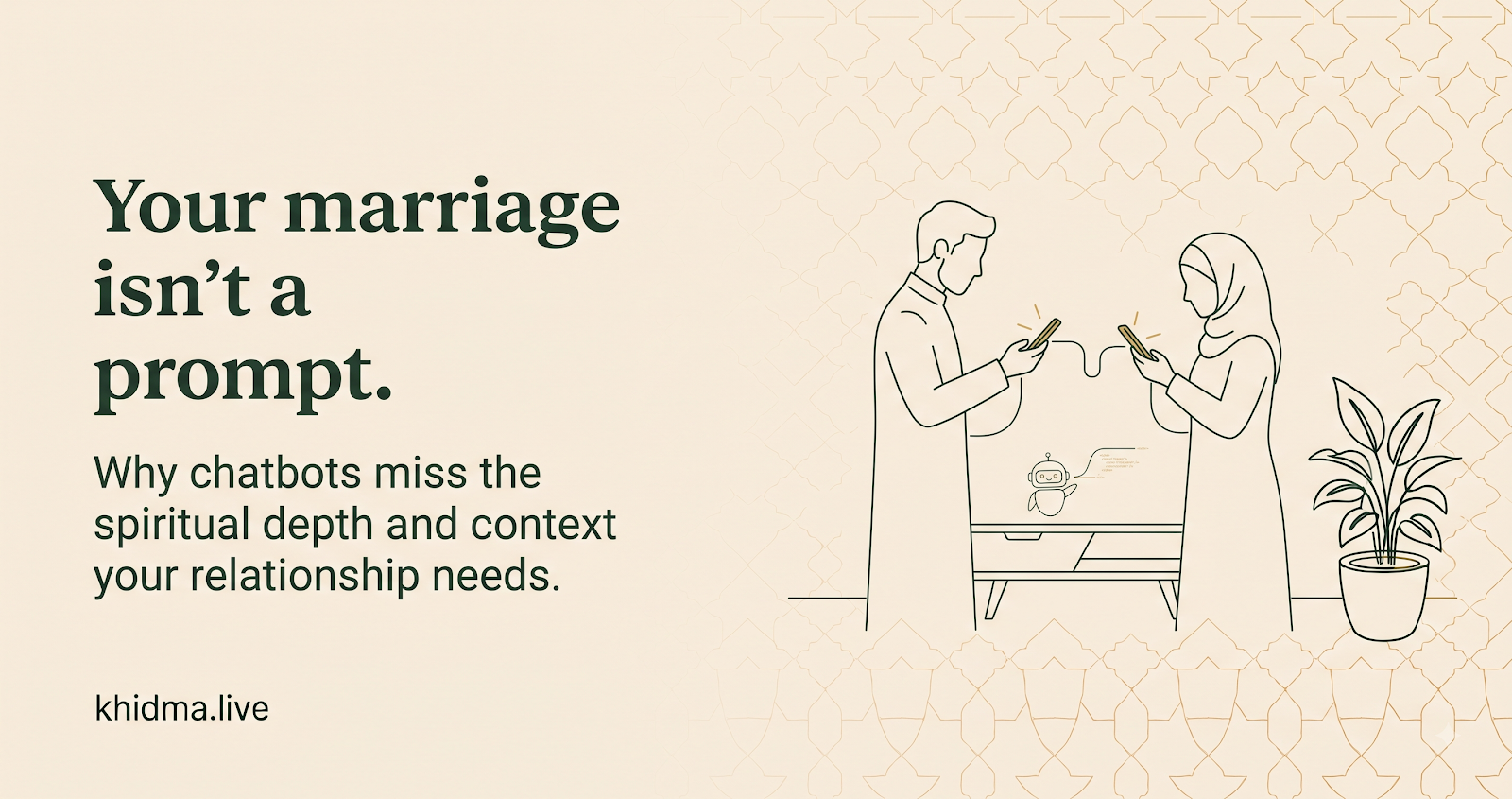
Can AI Give Marriage Advice? Why Muslim Couples Need More Than a Chatbot
Feed an AI your version of a marital dispute, and it will tend to hand you back your own narrative, polished and reinforced. It will validate your frustration, affirm your grievance, and confirm your sense that you are the reasonable one. This feels like insight. It is actually just a mirror with good grammar.
Is My Nikah Still Valid? What Islam Says About Talaq
My husband said talaq, is my nikah still valid? Understand what determines talaq validity in Islam, why online answers conflict, and how to get a real ruling privately.
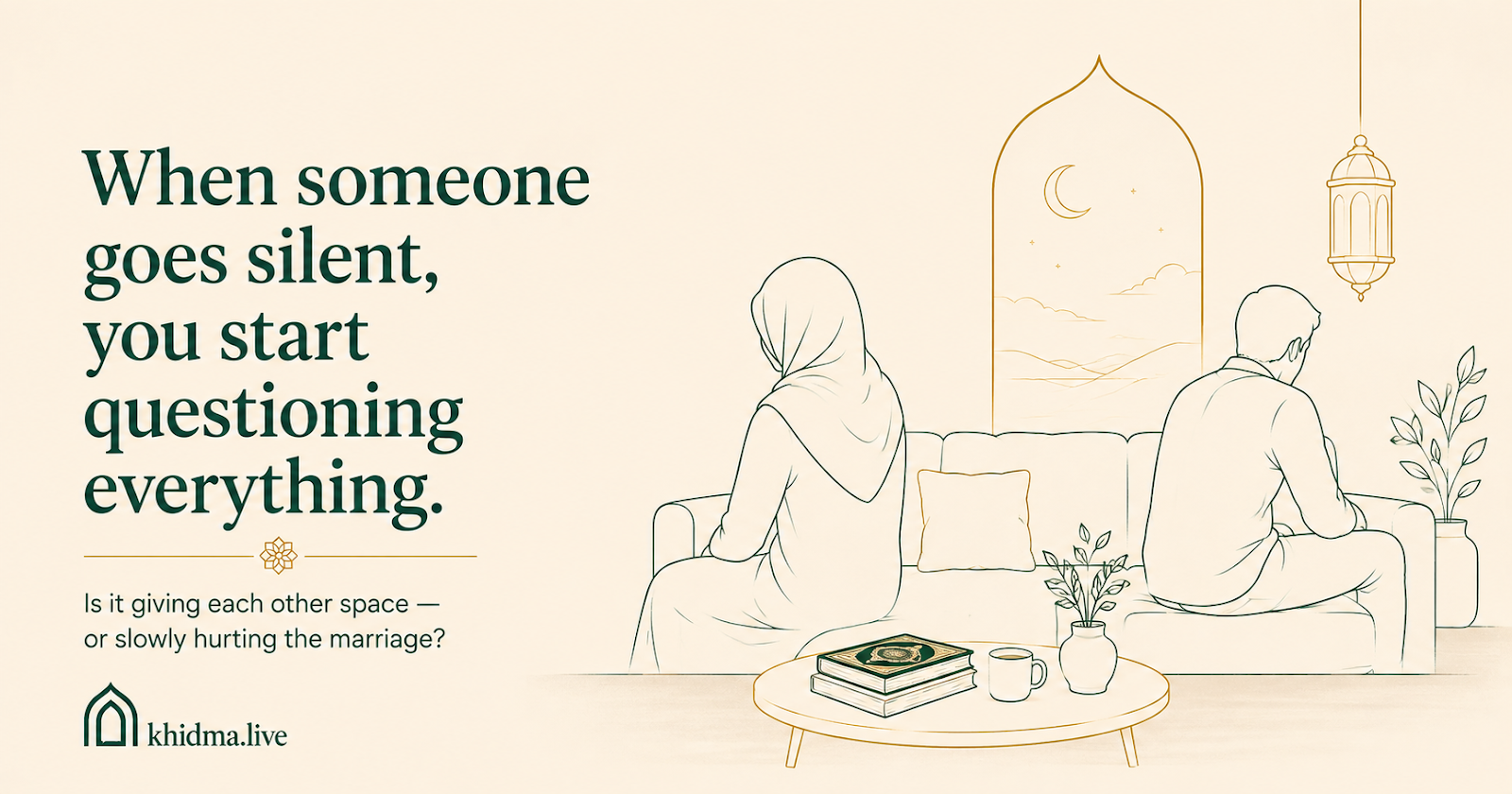
When Silence Becomes Toxic: The Psychological and Spiritual Toll of the "Silent Treatment"
Is the silent treatment permissible in Islam? Learn how prolonged silence affects mental health, what the Qur'an teaches about communication in marriage, and how to seek Islamic guidance when emotional neglect becomes overwhelming.
The Global Muslim Divorce Crisis Nobody Is Talking About
Less than 50% of mosque imams in Western countries hold any formal counselling qualification. Those who intervene face personal legal liability, community backlash, and zero enforcement authority. Women — who initiate 90% of divorces in Saudi Arabia and file khula at 1.57 times the rate of men in Pakistan — navigate male-dominated mosque spaces where their concerns are routinely minimized.
Islamic Marriage Counseling Online: A Complete Guide for Muslim Couples
Discover how Islamic marriage counseling online combines prophetic wisdom with clinical psychology to help Muslim couples navigate conflict, emotional unavailability, talaq questions, and in-law pressure — privately, from anywhere. AUTHOR: Team Khidma
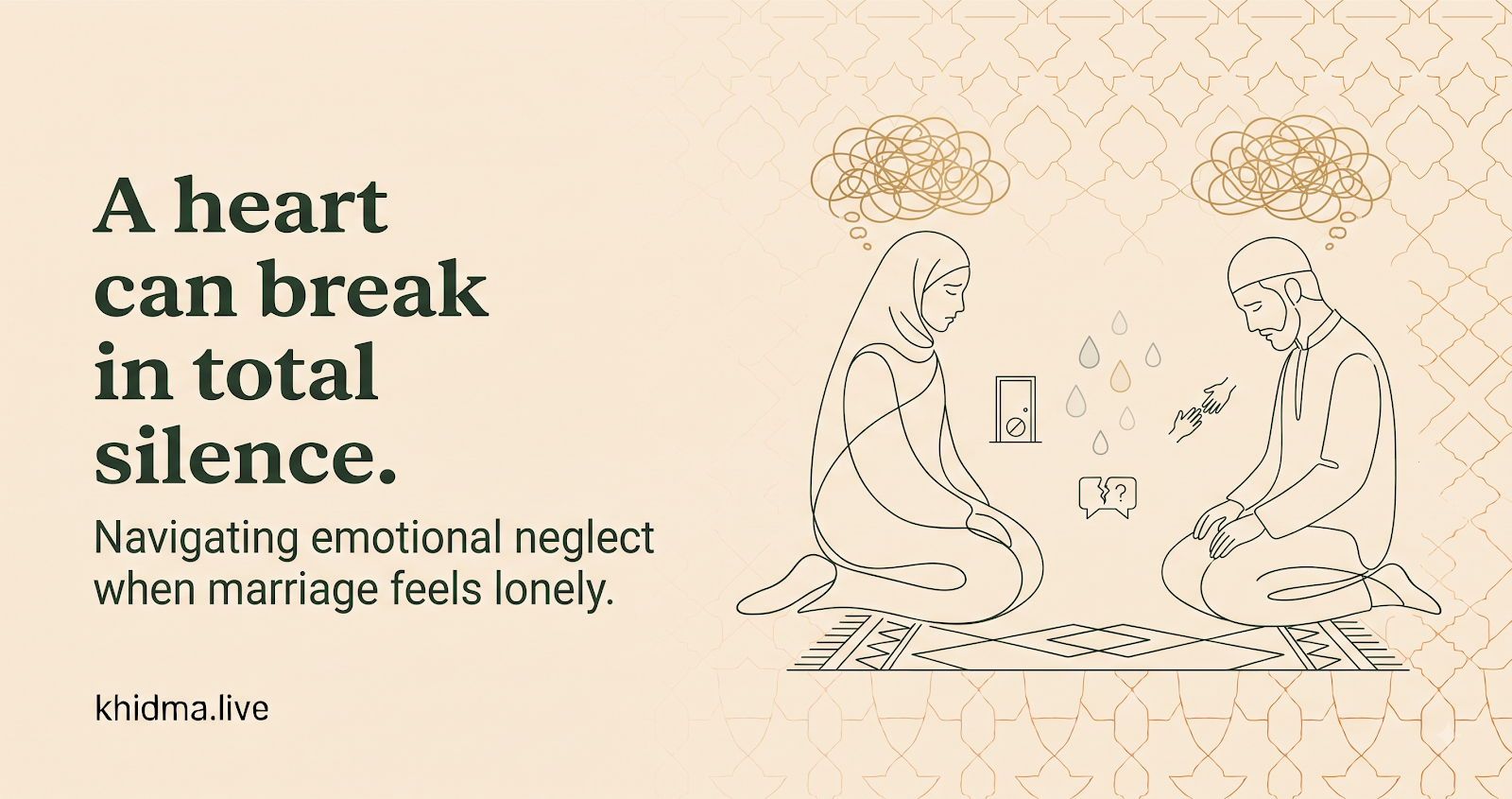
Navigating Emotional Neglect in a Muslim Marriage: Feeling Lonely in Marriage? Islamic Perspective on Emotional Neglect
Feeling emotionally neglected in marriage while your husband appears kind to everyone else? Learn the Islamic perspective on emotional neglect, manipulation, emotional rights in Islam, and how to seek guidance.
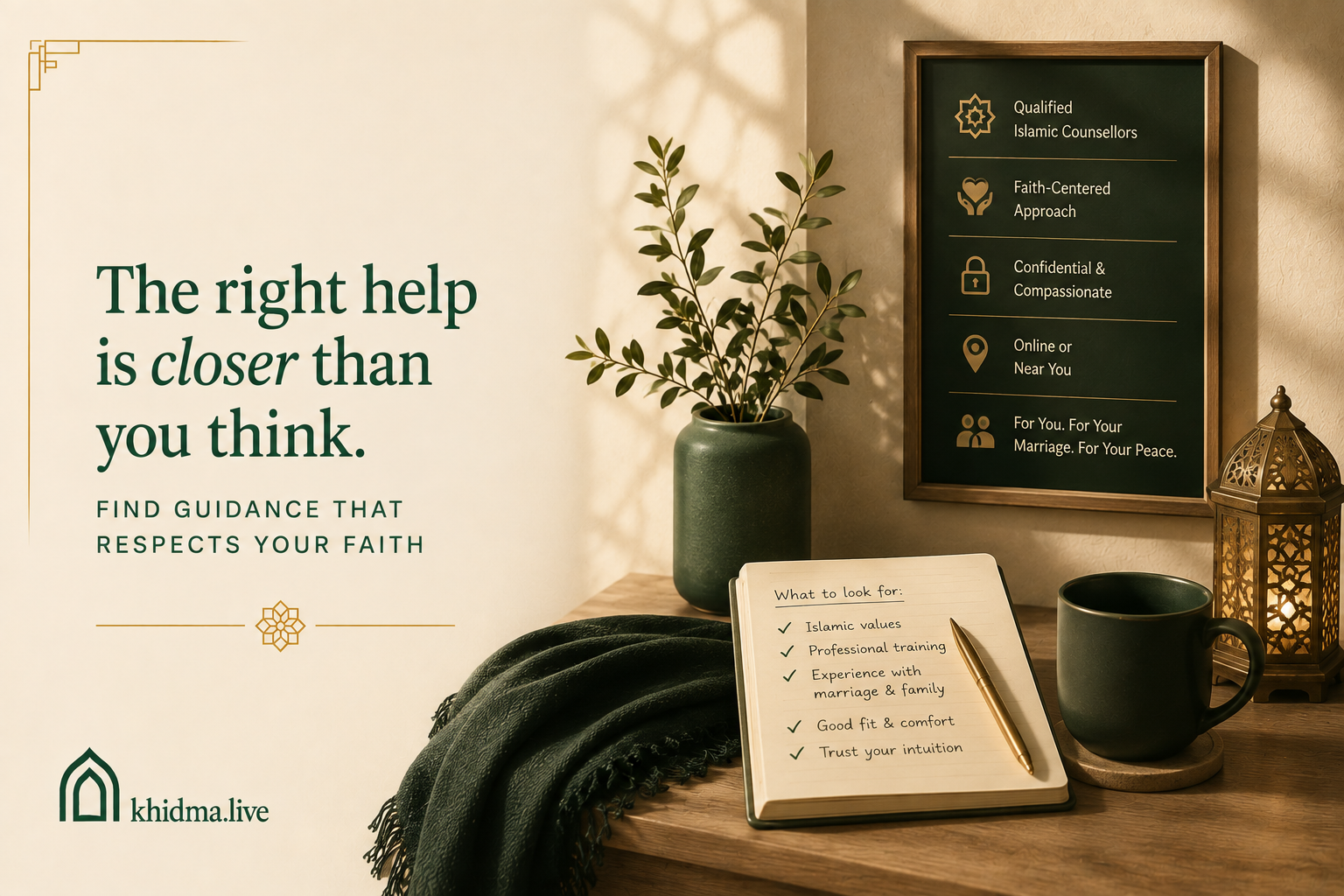
Islamic Counselling Near Me: How to Find the Right Help
Is there anyone qualified around here? Is there anyone who will understand my faith without me having to explain it? And — often unspoken — is there anyone I can see without my community finding out?
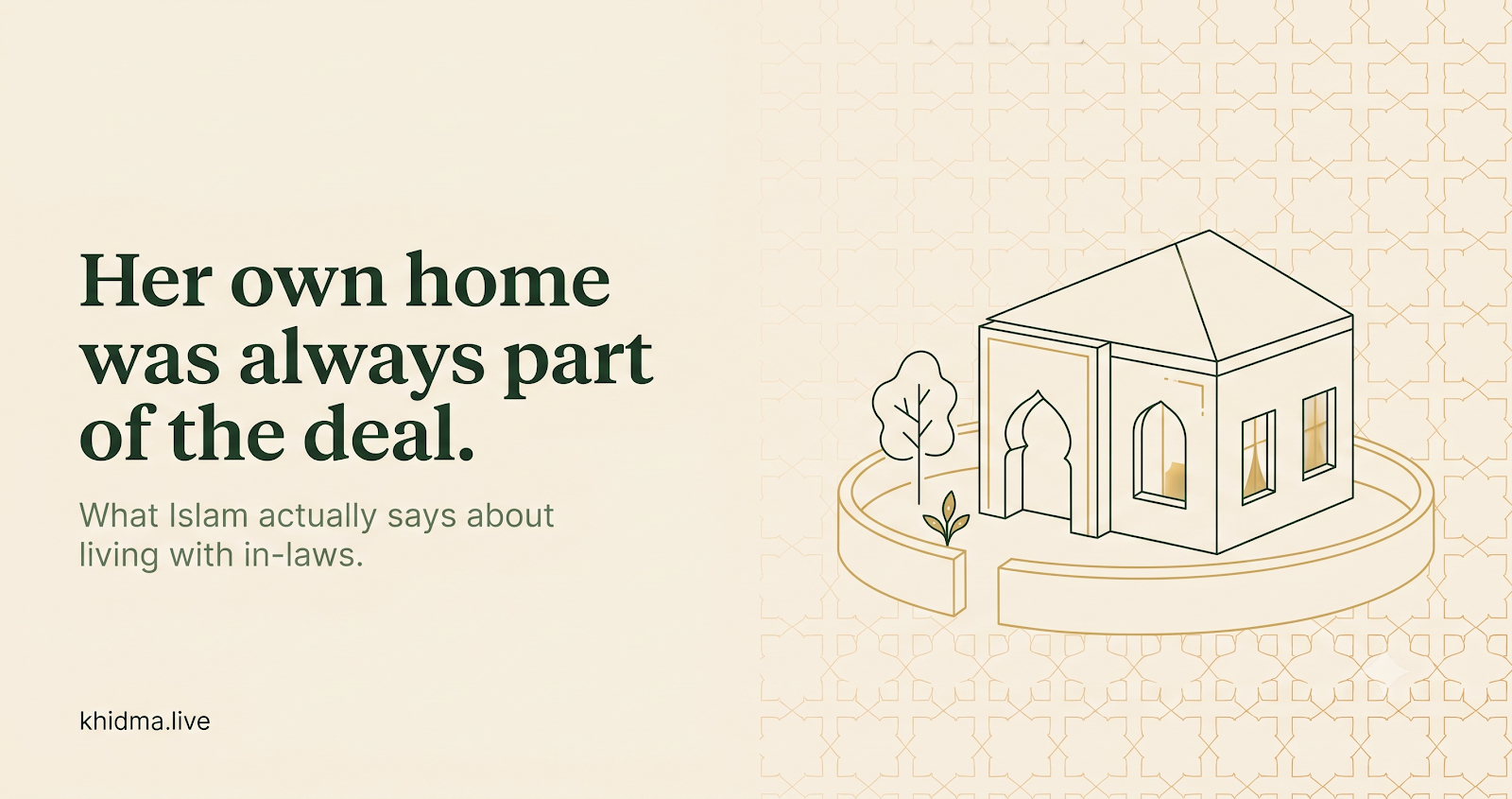
Do I Have to Live With My In-Laws? Islamic Rights in Marriage
In-laws interfering in your marriage? What Islam says about living with in-laws, whether a wife must serve them, and where a husband's obligations actually sit.
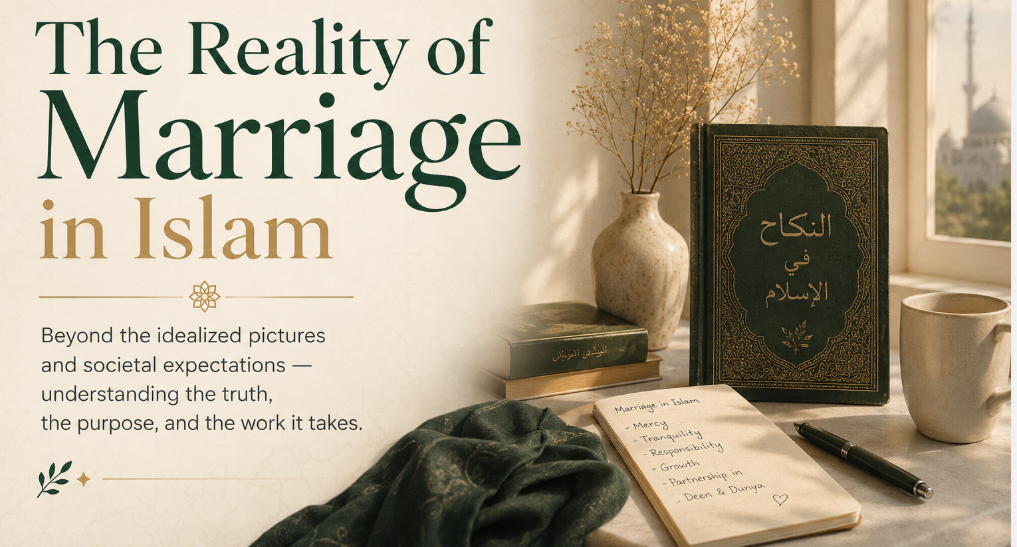
The Reality of Marriage in Islam: Love, Unity, and Letting Go of Ego
Discover the true meaning of marriage in Islam through the teachings of Sheikh Noor ul Hasan. Learn about love, compromise, ego, patience, and building a peaceful Islamic marriage rooted in faith and emotional connection.
Free Islamic Counselling Online: How It Works
Free Islamic counselling online actually offers and how to tell when your situation needs more than a single answer. If you have searched for free Islamic counselling online, you were probably not browsing.
Islamic Marriage Advice: The Complete Do's and Don'ts Guide
Practical Islamic marriage advice grounded in Quran and Sunnah — covering communication, in-laws, conflict, and when to seek professional Muslim marriage counseling. A complete guide for Muslim couples.
Limits of a Wife's Obedience in Islam: Questions about the boundaries of marital authority
Islam gives a husband rights — but not unlimited authority. Explore what classical fiqh says about the limits of obedience, a wife's protected autonomy, and when demands cross into harm.
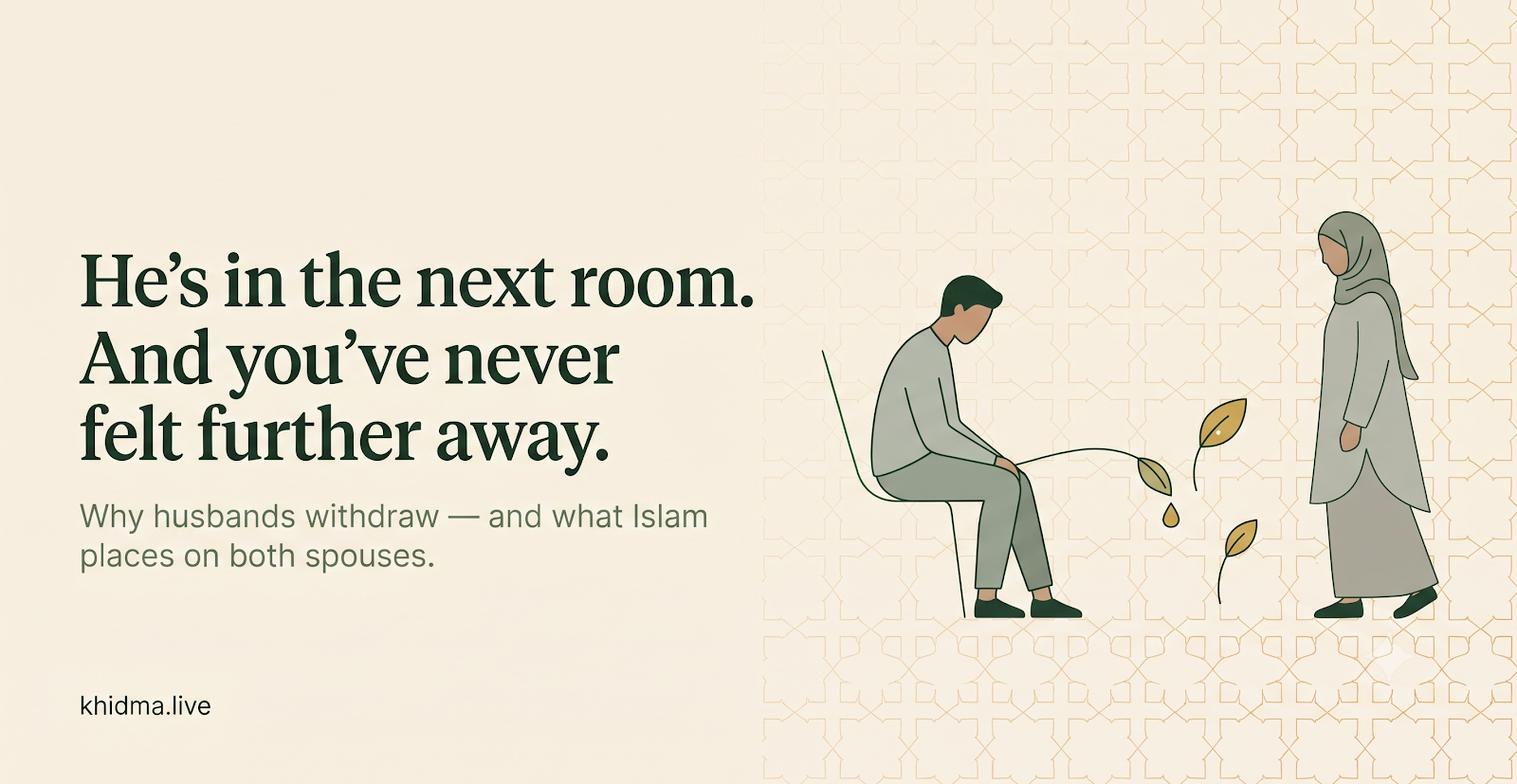
Why Does My Husband Ignore Me? Islamic and Psychological Reasons
Why does my husband ignore me? The psychological reasons behind emotional withdrawal, what Islam places on both spouses, and what actually helps.
Staying in a Loveless Marriage for the Children: What Islam Says
Staying in a loveless marriage for the children? What Islam actually says about emotional fulfillment as a mutual right, whose responsibility a marriage is, and when sabr becomes something else.
Is Waswasa a Sin? The 5 Types and What to Do
Is waswasa a sin? Understand intrusive thoughts in Islam — why they aren't sinful, why they feel real, and how to break the cycle with Islamic support.
Dua for Marriage: Powerful Prayers, Guidance & Islamic Tips
Authentic duas for marriage from the Quran and Sunnah — for finding a spouse, restoring love, and navigating hardship. Plus guidance on when dua works best alongside counsel.
Is the Silent Treatment Haram in Islam? The 3-Day Rule Explained
Is the silent treatment haram in Islam? Understand the 3-day rule, when silence becomes emotional abuse, and what the Quran prescribes instead.
Is Marriage Counseling Haram in Islam?
Is marriage counseling haram in Islam? What the Quran and Sunnah actually say about seeking qualified help for a struggling marriage.
Muslim Couples Therapy: How It Works and When to Try It
Discover how Muslim marriage counseling and Islamic couples therapy combines clinical psychology with faith-based guidance to help Muslim couples rebuild trust, improve communication, and navigate crisis — privately, online.

Anxiety in Islam: Is It a Sign of Weak Iman?
Does experiencing anxiety mean your iman is weak? Discover what Islam really teaches about anxiety, authentic duas for anxiety, and how faith and professional support can work together for healing.
He Treats Me Well but Hides His Phone: Rebuilding Trust After Betrayal in Islam
A husband who provides yet keeps secret digital conversations creates a unique kind of pain. Explore the Islamic rulings on phone privacy, the psychology of betrayal trauma, and how Muslim couples rebuild trust.
Mental Health in Islam: What the Deen Says, and Where to Get Help
Western mental health models often overlook faith, leaving Muslims feeling unseen. Discover what Islamic mental health means, why the soul belongs in healing, and how faith-integrated therapy actually works.
Islamic Premarital Counseling Online: The Muslim Couple's Complete Guide
Discover how Islamic premarital counseling online helps Muslim couples align on finances, family expectations, communication, and Islamic rights before marriage — privately, with verified scholars and Muslim therapists AUTHOR: Team Khidma
Is Emotional Neglect Grounds for Khula? An Islamic Perspective on Emotional Harm in Marriage
because emotional harm leaves no visible scars, many struggle to validate their own pain.
From Google and AI to Mimbar: Why Islamic Answers Need Qualified Scholars, Not Algorithms
"Deen was never meant to be crowdsourced." This article explores why Islamic answers need qualified scholars not algorithms, and how technology should serve guidance, not replace it.
Navigating Emotional Needs & Communication in Muslim Marriages - A workshop session by Katheeja Suhail
The "Inside Her Mind" workshop, led by counseling psychologist Katheeja Suhail, offered a profound exploration of women's emotional needs and communication dynamics within Muslim marriages by blending clinical psychology with Islamic wisdom. Katheeja explained that women's tendencies to overthink—often rooted in perfectionism or hyper-vigilance—require empathy rather than immediate problem-solving, highlighting that wives primarily seek emotional validation and active listening when distressed rather than quick fixes. She also addressed destructive communication habits like criticism, contempt, defensiveness, and stonewalling, advising couples to replace them with gentle requests, mutual acknowledgment, and genuine emotional presence. Ultimately, the session anchored these psychological insights in the Quranic concept of sakinah (tranquility), reminding spouses that nurturing a marriage through mutual love and respect, modeled after the Prophetic example, is both a pathway to emotional healing and a deeply rewarding act of worship.
Amr Bil Ma’ruf Wa Nahi Anil Munkar: The Forgotten Duty of the Ummah
Which group will we belong to? The people participating in corruption? The people remaining silent? Or the people sincerely trying to preserve truth with wisdom, patience, and mercy?
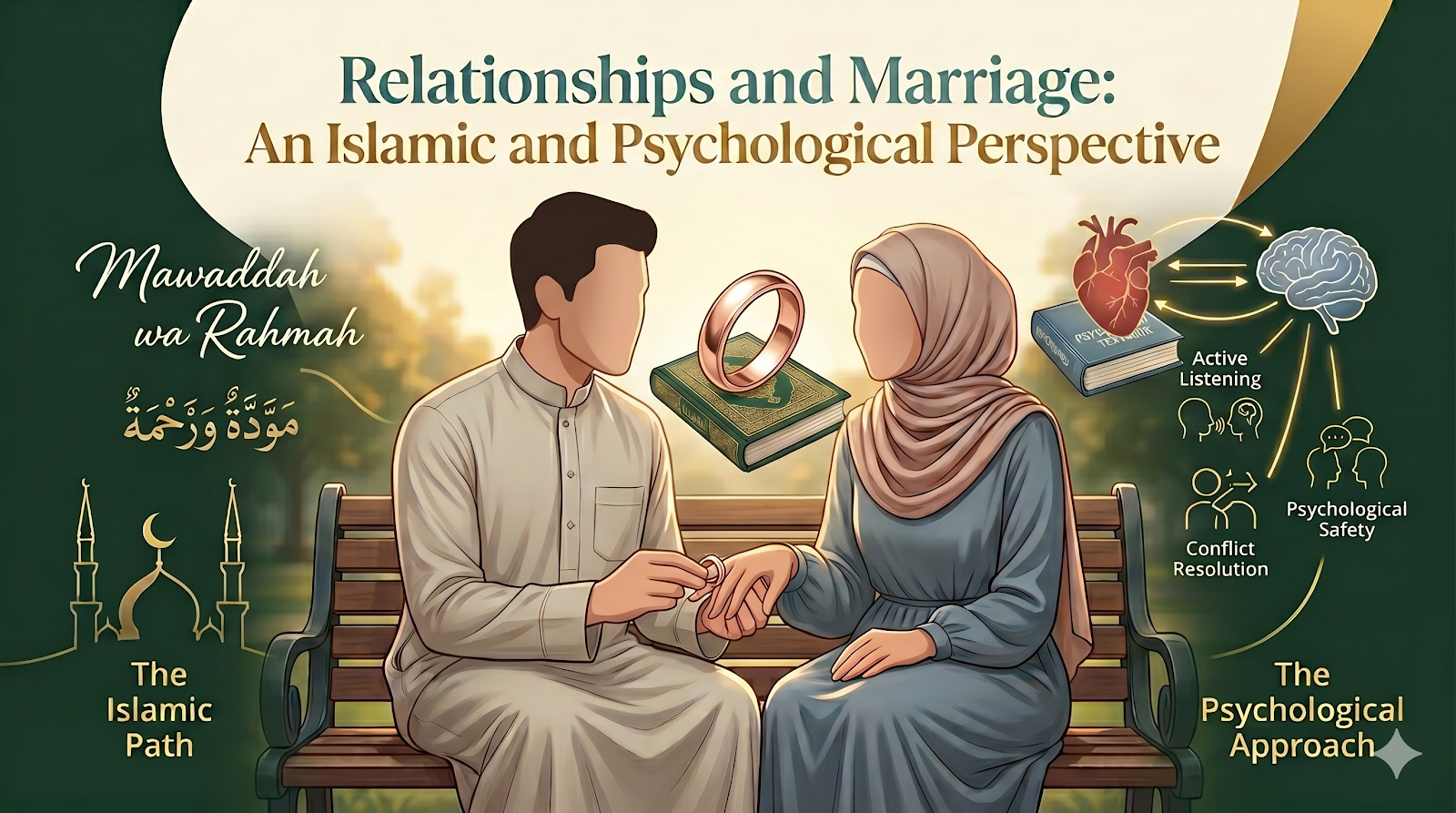
Relationships and Marriage: An Islamic and Psychological Perspective by Dr. Saiqua Alam
Important questions modern relationships are facing today. The important elements mentioned here, listening to one another to understand,emotional assurance and validation. Expressing emotions are missing in today's relationships. In today’s world, however, relationships are increasingly facing emotional and psychological challenges. Despite living in a hyperconnected society, many couples experience loneliness within marriage. Harsh communication, emotional neglect, unrealistic expectations, lack of listening, stress, unexpressed emotions, and emotional burnout have become common problems weakening relationships.