Islamic Marriage Advice: The Complete Do's and Don'ts Guide
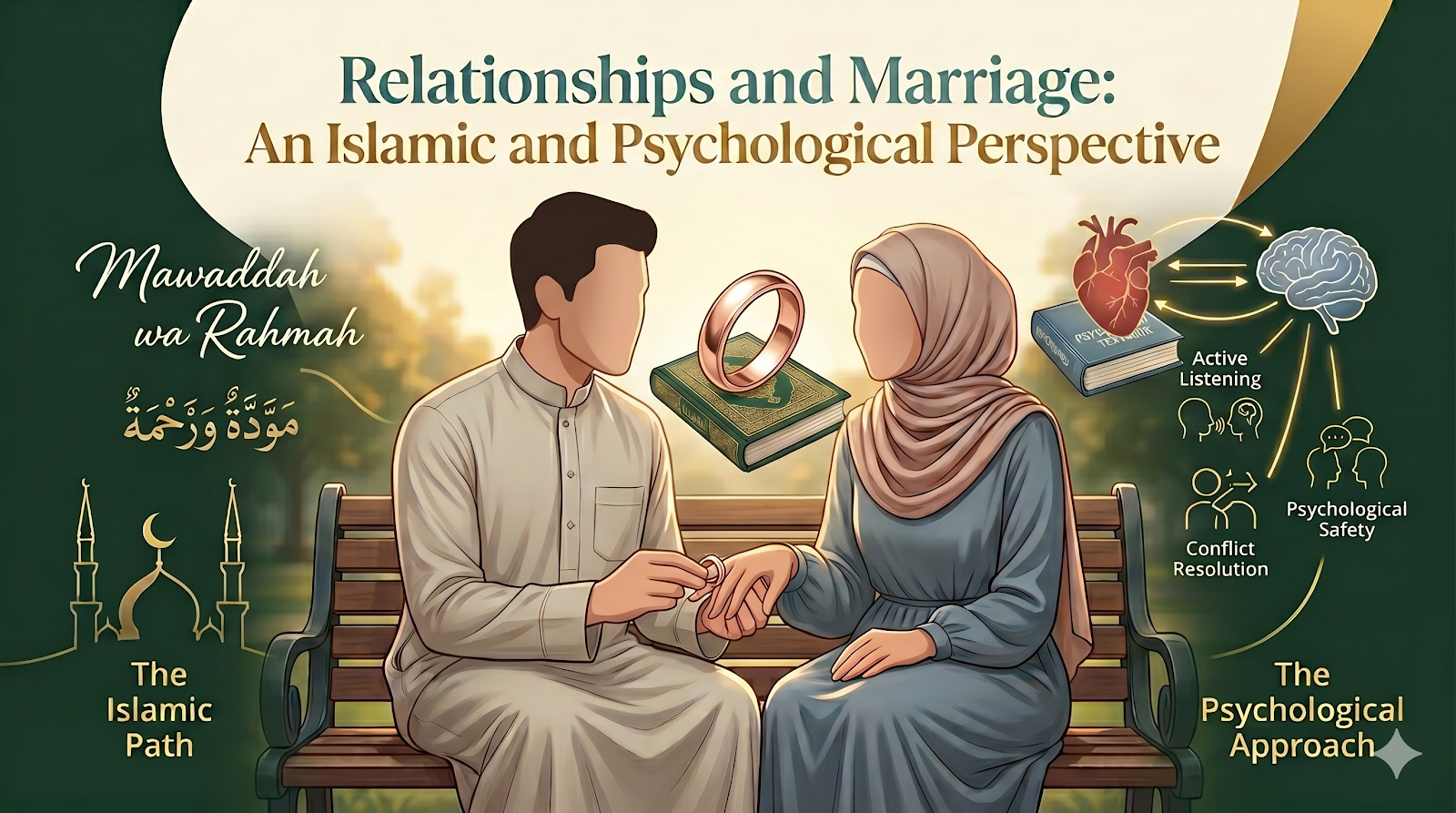
Every Muslim couple wants the same thing on their wedding day: a marriage filled with Sakinah, Mawaddah, and Rahmah — tranquility, love, and mercy, exactly as the Quran describes it.
"And of His signs is that He created for you from yourselves mates that you may find tranquility in them; and He placed between you affection and mercy." (Surah Ar-Rum, 30:21)
Few couples are given practical, specific Islamic marriage advice on how to actually build that. Most are handed general wishes — "may Allah bless your union" — and left to figure out the rest through trial, error, and the slow accumulation of resentment.
This guide is different. It draws on classical Islamic principles, the real situations Khidma's scholars and therapists see most often, and the practical psychology of what actually keeps Muslim marriages strong. Some of this will be intuitive. Some of it will challenge habits you didn't know were harmful. All of it is grounded in Quran, Sunnah, and clinical understanding of how relationships function.
The Do's of a Strong Islamic Marriage
Do Prioritize Sakinah as a Daily Practice, Not a Wedding Day Wish Tranquility in a marriage is not something that happens automatically because two Muslims signed a Nikah contract. It is built daily, through small, consistent choices. A home should function as an emotional sanctuary — a place each spouse can retreat to from the pressures of the outside world, not another source of stress. This means greeting each other warmly. Choosing kind words even during disagreement. Making space for Mawaddah — the deep, affectionate love the Quran describes — through consistent small acts rather than occasional grand gestures. Muslim couples experiencing emotional unavailability often describe a marriage that looks functional from the outside — shared home, shared responsibilities — but has lost this daily practice of Sakinah entirely.
Do Practice Shura in Every Major Decision
A successful Islamic marriage operates as a partnership, not a hierarchy where one spouse dictates and the other complies. Shura — mutual consultation — is a Quranic principle that applies directly to marriage. Major decisions about finances, career changes, where to live, and how to raise children should be discussed together, with both voices genuinely weighted. Couples who practice Shura consistently report significantly fewer instances of resentment building silently over time. The opposite — a marriage where one spouse makes unilateral decisions — is one of the most common patterns Khidma's scholars and therapists see in couples who eventually seek emotional support for relationship breakdown. Do Fulfill Islamic Rights With Ihsan, Not Just Obligation Islam outlines specific, detailed rights for both spouses — financial maintenance (Nafaqah), emotional care, and physical intimacy among them. The minimum standard is fulfilling these rights. The Islamic standard is fulfilling them with Ihsan — excellence that goes beyond the bare requirement. This distinction matters enormously in practice. A husband who provides Nafaqah but does so begrudgingly is meeting the legal minimum. A husband who provides for his wife with generosity, warmth, and genuine care is living the standard of Ihsan the Prophet ﷺ modeled in his own marriages.
Do Keep Conflict Private
Disagreements are entirely natural. Even the Prophet ﷺ and his wives experienced moments of friction. What distinguishes a healthy marriage is not the absence of conflict — it is how that conflict is contained. Airing marital disputes to extended family, friends, or social media invites outside bias into a space that should remain sacred between spouses. It also makes reconciliation significantly harder, because third parties who heard one side of the argument often carry lasting judgments about a partner who has already moved past the conflict.
The Don'ts of a Strong Islamic Marriage
Don't Weaponize the Deen One of the most damaging patterns in troubled Muslim marriages is the selective use of religious text to control, guilt, or demand submission from a spouse — rather than to genuinely guide toward mutual elevation. Religion used as a weapon in an argument — quoting a verse about obedience while ignoring the corresponding verses about kindness, mercy, and mutual rights — is a misuse of Islamic knowledge that causes real harm. If you are discussing Islamic rights and obligations within your marriage, that conversation should always be coupled with mercy, not used as ammunition.
This pattern is precisely why many Muslim women who reach out to Khidma describe feeling unable to trust generic religious advice from people close to them — and why access to a qualified, neutral Islamic scholar matters so much when these conversations need to happen properly.
Don't Resurrect the Past During New Conflicts
Bringing up old grievances during a current disagreement is one of the most reliable ways to derail any possibility of resolution. The conversation stops being about the present issue and becomes a referendum on the entire relationship history. Islamic tradition emphasizes genuine forgiveness — letting go of a grievance once it has been addressed, rather than holding it in reserve as ammunition for future arguments. This does not mean ignoring genuine, unresolved patterns. It means addressing them directly and completely, rather than allowing them to resurface indefinitely.
Don't Let In-Law Dynamics Override Your Marital Boundary Honoring parents is a major pillar of Islamic faith. It is also one of the most common sources of conflict in Muslim marriages — particularly within South Asian diaspora communities, where extended family involvement in a couple's daily decisions is often expected as a cultural norm.
Islamic jurisprudence is clear that a wife has a right to her own home, her own privacy, and her husband's primary loyalty — alongside his obligation to honor his parents. These are not contradictory. A husband caught between these obligations must protect his wife within the marriage while continuing to honor his parents outside of it — not collapse one obligation into the other.
Read more: Is Emotional Neglect Grounds for Khula? An Islamic Perspective
Don't Suffer in Silence to Avoid Community Stigma This may be the most consequential "don't" on this list, because it is the one most directly tied to long-term marital and psychological harm. Many Muslim couples allow unhealthy communication patterns, emotional distance, or unresolved resentment to persist for years — not because they don't recognize the problem, but because seeking help feels like an admission of failure, or risks community gossip. This fear has no basis in Islamic scholarship. The Quran explicitly prescribes seeking outside, objective arbitration when a marriage is in distress:
"And if you fear dissension between the two, send an arbitrator from his people and an arbitrator from her people. If they both desire reconciliation, Allah will cause it between them." (Surah An-Nisa, 4:35)
65% of Khidma users have never sought any form of counseling before — not because the need wasn't there, but because the stigma kept them from acting on it sooner.
When Good Intentions Are Not Enough: Recognizing When You Need Professional Guidance Most of the Do's and Don'ts above can be practiced by any committed couple willing to make the effort. But some patterns require more than good intentions and willpower to resolve. Consider seeking professional Islamic marriage counseling if your marriage shows any of these patterns: The Silent Marriage. You no longer argue — but you also no longer talk. The absence of conflict is not the same as the presence of connection. Read more about this specific pattern: When Silence Becomes Toxic The Repeating Argument. The same disagreement resurfaces in slightly different forms — about finances, in-laws, household responsibilities — without ever reaching genuine resolution. Broken Trust. Infidelity, a second marriage without consultation, or a significant betrayal has occurred, and neither Islamic guidance alone nor emotional processing alone is sufficient to move forward. Confusion About Islamic Status. Talaq has been said in a moment of anger, and neither spouse is certain of the marriage's current Islamic validity. This requires a verified scholar's ruling — not assumption, and not a forum opinion.
For deeper exploration of the psychological and Islamic dimensions of marriage, see Relationships and Marriage: An Islamic and Psychological Perspective by Dr. Saiqua Alam.
Tying the Camel: The Islamic Case for Seeking Help The Prophet ﷺ was once asked by a Bedouin man whether he should leave his camel untied and simply trust in Allah. The Prophet ﷺ replied: "Tie your camel first, then put your trust in Allah." (Tirmidhi) This hadith is frequently cited — and for good reason. It establishes a clear Islamic principle: practical action and trust in Allah are not in tension with one another. They work together. Recognizing that your marriage needs outside support is not a sign of weak Tawakkul. It is the practical action — the tying of the camel — that responsible spouses take before placing their full trust in Allah for the outcome. Booking a session with a verified Islamic scholar or certified Muslim therapist is one of the most concrete ways to fulfil this principle for the sake of your marriage and your family's future.
Frequently Asked Questions About Islamic Marriage Advice
- What does Islam say about resolving conflict in marriage?
The Quran prescribes appointing objective arbitrators when a marriage faces dissension (Surah An-Nisa, 4:35). Conflict should be addressed directly between spouses where possible, and through qualified, neutral guidance when it cannot be resolved alone. 2. Is it haram to argue with your spouse?
No. Disagreement is a natural part of any marriage, and even the Prophet ﷺ experienced moments of friction with his wives. What matters Islamically is how conflict is handled — with dignity, privacy, and a commitment to resolution rather than escalation. 3. What are a wife's Islamic rights in marriage?
A wife is entitled to financial maintenance (Nafaqah), emotional care, physical intimacy, and to be treated with Ihsan — excellence in conduct. She also retains rights to her own property, income, and personal dignity within the marriage. For a ruling specific to your situation, a verified Islamic scholar can provide detailed guidance. 4. What are a husband's Islamic obligations in marriage?
A husband is obligated to provide financial maintenance, treat his wife with kindness and fairness, fulfil her emotional and physical needs, and protect her standing — including within his own extended family. Leadership in marriage, Islamically, is a responsibility of care, not authority for control. 5. Is it wrong to bring up old issues during an argument?
While not explicitly prohibited, Islamic tradition emphasizes genuine forgiveness and moving forward once a grievance has been addressed. Repeatedly resurrecting past mistakes during new conflicts is widely recognized — both Islamically and clinically — as a pattern that prevents resolution and damages trust over time. 6. How should Muslim couples handle in-law conflicts?
Both honoring parents and protecting the marital relationship are Islamic obligations that must be balanced, not traded off against each other. A husband should maintain his duty to his parents while ensuring his wife's home, privacy, and emotional priority within the marriage are protected. 7. Is seeking marriage counseling a sign of weak faith?
No — this is a misconception with no basis in Islamic scholarship. The Quranic command to seek arbitration during marital dissension (4:35) directly supports professional intervention. Seeking help is considered a practical, Sunnah-aligned action, not a sign of weak Tawakkul. 8. What is the Islamic perspective on divorce as a last resort?
Islam permits divorce but strongly encourages exhausting all avenues of reconciliation first — including arbitration and qualified counseling — before reaching that decision. Understanding what Islam says about the divorce process is an important step for couples considering this path. 9. Can a Muslim couple seek counseling from a non-Muslim therapist?
While not prohibited, many Muslim couples find that secular therapists lack the cultural and Islamic context needed to fully understand their situation — leading to advice that may conflict with their values. A Muslim therapist trained in both clinical psychology and Islamic ethics typically provides more relevant, applicable guidance. 10. How do I find qualified Islamic marriage advice for my specific situation?
General advice, including this guide, provides a foundation — but every marriage has specific circumstances that benefit from personalized guidance. Khidma's verified Islamic scholars and certified Muslim therapists are available for private sessions tailored to your exact situation. You can also ask a free question to a scholar before booking a full session.
Building the Marriage Allah Described The Sakinah, Mawaddah, and Rahmah described in Surah Ar-Rum are not guaranteed by the Nikah contract alone. They are built — through Shura, through Ihsan, through privacy in conflict, and through the courage to seek help when good intentions are not enough. If your marriage needs more support than general advice can offer, that is not a failure. It is the tying of the camel before placing your trust in Allah for what comes next. Khidma connects Muslim couples with verified Islamic scholars trained at Masjid al-Haram and Madinah University and certified Muslim therapists and psychologists — for private, confidential guidance available across the United States, United Kingdom, and UAE. Ask your first question for free →