Relationships and Marriage: An Islamic and Psychological Perspective by Dr. Saiqua Alam
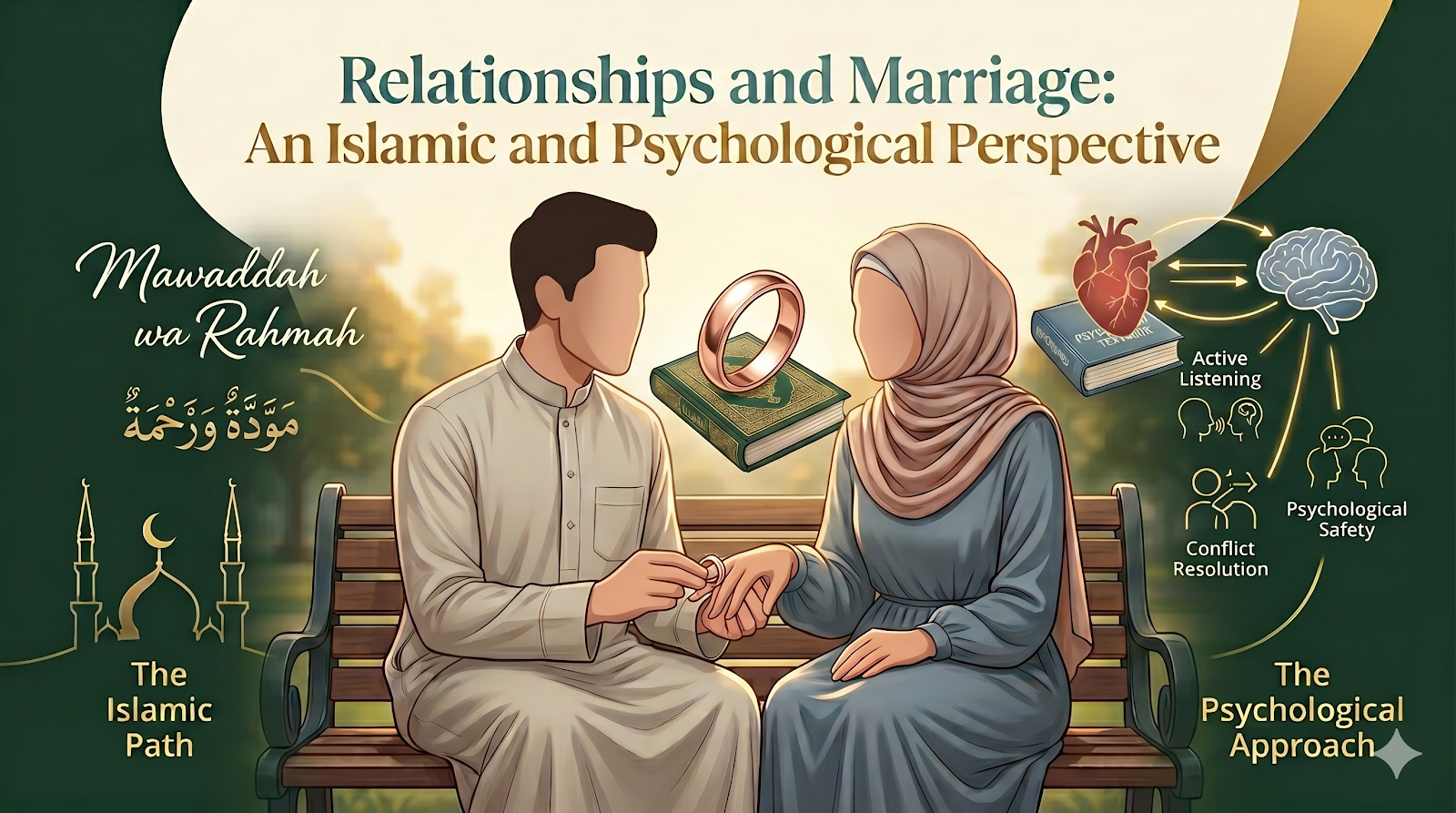
- Why do many relationships become emotionally weak after a few years of marriage?
- Why do people who once deeply loved each other slowly begin feeling emotionally distant?
- Why do many couples quit during the most important phase- the phase that was actually meant to build emotional maturity and stability?
These are some of the most important questions modern relationships are facing today.
A beautiful incident from the life of the Prophet ﷺ teaches us the emotional foundation of marriage. Once, when Ṣafiyyah رضي الله عنها was unable to continue the journey due to emotional distress and tiredness, the Prophet ﷺ comforted her gently and wiped her tears with his blessed hands. In another narration, the Prophet ﷺ would listen attentively to his wives, emotionally reassure them, and show affection openly. These incidents remind us that emotional care, gentleness, and understanding are not modern psychological discoveries alone they were already part of the Prophetic model of relationships.
The important elements mentioned here, listening to one another to understand,emotional assurance and validation. Expressing emotions are missing in today's relationships. In today’s world, however, relationships are increasingly facing emotional and psychological challenges. Despite living in a hyperconnected society, many couples experience loneliness within marriage. Harsh communication, emotional neglect, unrealistic expectations, lack of listening, stress, unexpressed emotions, and emotional burnout have become common problems weakening relationships.
We have conducted a poll on “ what are the main things in your relationship which hurts the most and you think quitting” Most of the answers were:
- The tone in communication.
- Not listening.
- Unexpressed emotions.
From an Islamic perspective, marriage is not merely a legal or social arrangement. It is a sacred bond built upon Mawaddah (love), Rahmah (mercy), and Sakinah (tranquility). Allah mentions in the Qur’an that spouses are created so that human beings may find peace and comfort in one another. Therefore, marriage is not only about attraction; it is about emotional safety, companionship, spiritual growth, and mutual mercy through every stage of life.
Different psychological phases in marriage:
One important reality that many people are unaware of is that every relationship naturally passes through emotional phases.
The first phase is often called the honeymoon phase, where emotions are intense and everything appears exciting and beautiful. This phase may continue from before marriage up to the first one or two years after marriage.
Gradually, couples enter the** attachment and expectation phase**, where emotional needs, responsibilities, and expectations become stronger. After this comes the reality and adjustment phase, where differences in communication styles, personalities, habits, emotional needs, and family expectations become visible. This stage is extremely important because many couples wrongly assume that emotional discomfort means the relationship is failing. In reality, this phase is often the beginning of emotional maturity.
Later comes the conflict and adjustment stage, where emotional hurt, harsh tone, feeling unheard, emotional withdrawal, and communication breakdown may occur. Most relationships do not collapse because of one major incident. Rather, they weaken due to repeated small emotional injuries that remain unresolved.
If couples develop emotional intelligence, empathy, patience, communication skills, and mutual respect, they slowly enter the stability and mature companionship phase. Here, love becomes calmer, deeper, and emotionally secure. The relationship transforms from emotional excitement into trust, peace, partnership, and mercy.
Islam strongly encourages gentleness and emotional excellence within marriage. The Prophet ﷺ said: “The best among you are those who are best to their families.” This highlights that emotional character inside the home is one of the greatest indicators of true character. --Sunan al-Tirmidhi (3895) and Sunan Ibn Majah.
Psychologically and emotionally, relationships can be strengthened through simple but powerful practices:
- Communicating calmly instead of reacting impulsively
- Expressing emotions instead of suppressing them
- Listening to understand, not merely to respond
- Addressing issues early before resentment builds
- Taking pauses and grounding oneself during conflicts
- Regularly appreciating and emotionally reassuring one another
Strong marriages are not those without disagreements. They are marriages where both individuals continue choosing patience, understanding, mercy, and growth through every phase of life together.
If still struggling with emotional confusion, burnout, seek expert guidance from me on Khidma!